
It’s taken less than 12 months for Chef Simon Ming to establish something truly unique at North Adelaide’s ODÉ Bistro – a venue that aims to break down the barriers between fine dining establishments and casual eateries.
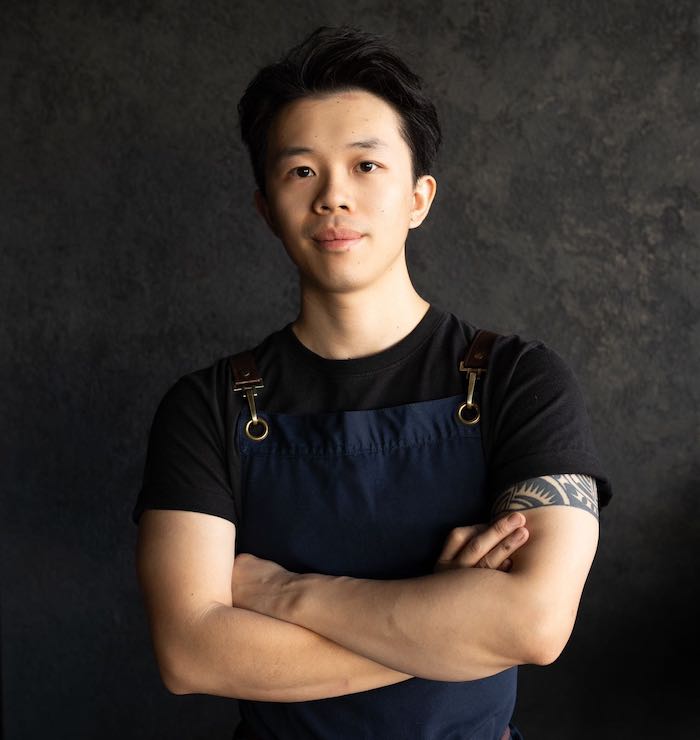
With his menu that pays homage to the flavours and cultures found across Australia – from First Nations to Asian and European – Chinese-born chef, Simon Ming, who was also shortlisted for Best New Talent in Gourmet Traveller’s 2025 Annual Restaurant Awards, expands on his restaurant’s vision, the influence of his luminaries and what’s next.
ODÉ Bistro is contemporary Australian fusion. How do you actualise this breadth of influence in your menu?
I believe doing fusion is to merge multiple cultures in a harmonious way. I studied classic French cooking at Le Cordon Bleu, so my fundamental cooking is purely classic French. I’ve also travelled and picked up some modern Spanish techniques. However, with my Asian heritage, I decided to mix some Asian flavours, spices and techniques into the menu. Most importantly, I think to reflect contemporary Australian fusion you need to have native ingredients throughout the menu to show respect for Aboriginal culture and people.
ODÉ Bistro is the first restaurant you’ve opened. What was your vision behind the venture?
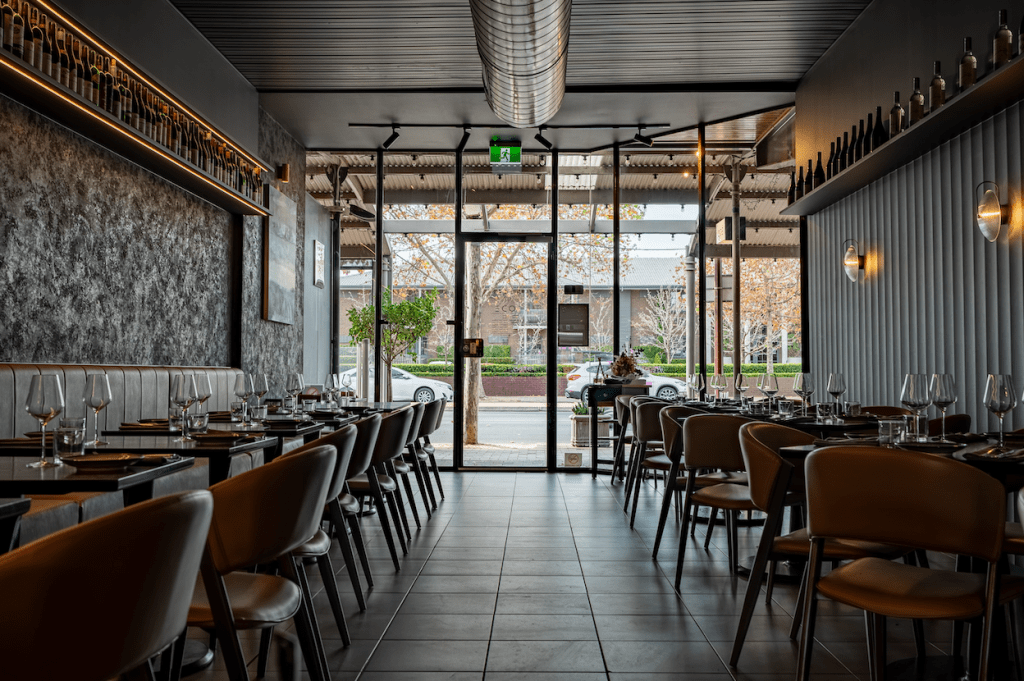
I wanted to create a different dining atmosphere in Adelaide. ODÉ Bistro is a new-generation fine dining restaurant. What I’m doing here – and why I call it a bistro – is cutting down the boundary between casual and fine dining. We still maintain the high quality a fine dining restaurant provides, however, in terms of pricing, we want to make it reasonable. We offer a tasting menu and à la carte options. Even if customers order just one or two items, they’ll be receiving some of the highest quality [food] in the city.
Walk us through some of the signature dishes.
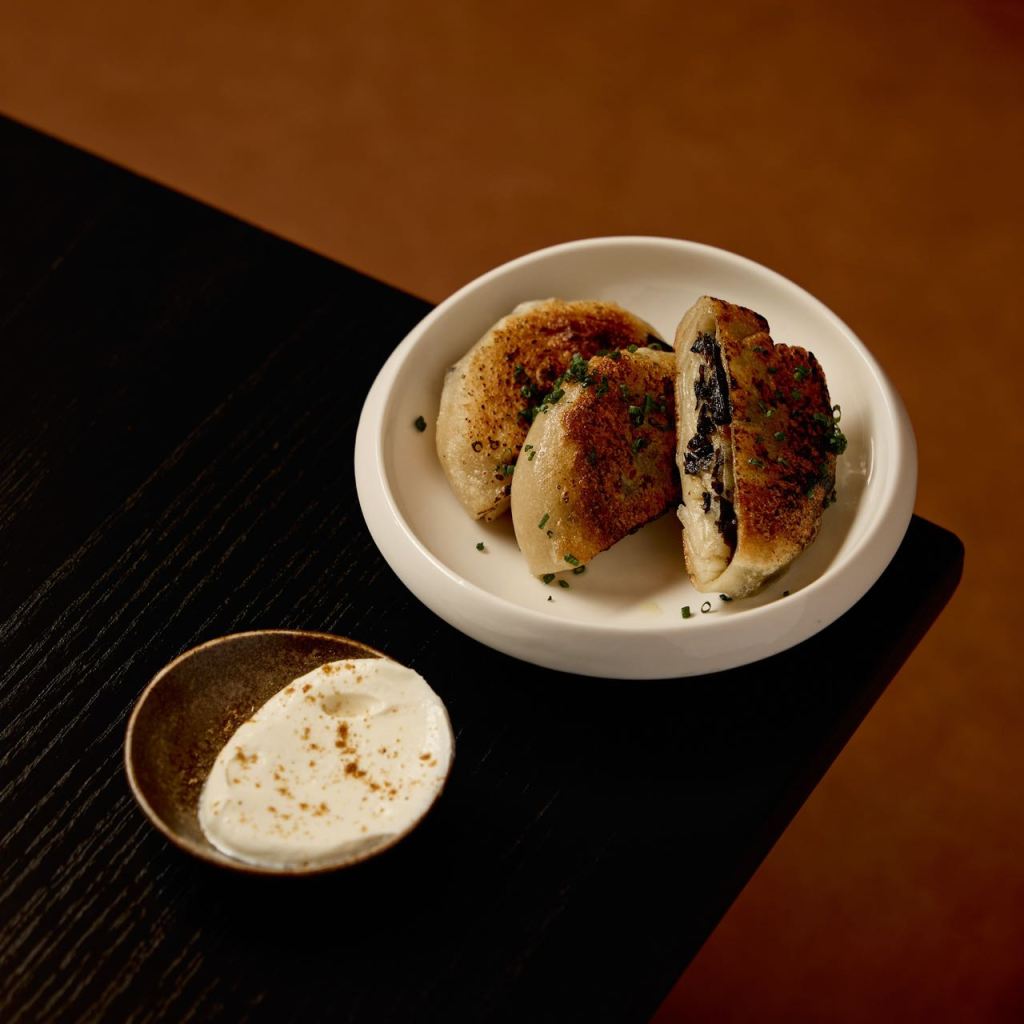
The first is the shallot pancake. I was born in China and this pancake was everywhere! It connects me with my childhood memories, but I elevated it by mixing it with an Italian focaccia bread recipe, using olive oil (as well as the traditional spring onion oil) and flattening it out so it’s almost like roti. It’s infused with seasoning and crispy spring onion and finished on charcoal – it’s a flavour bomb! Crunchy on the outside, fluffy on the inside and a little salty. It’s also served with savoury yoghurt and Sichuan peppercorn oil.
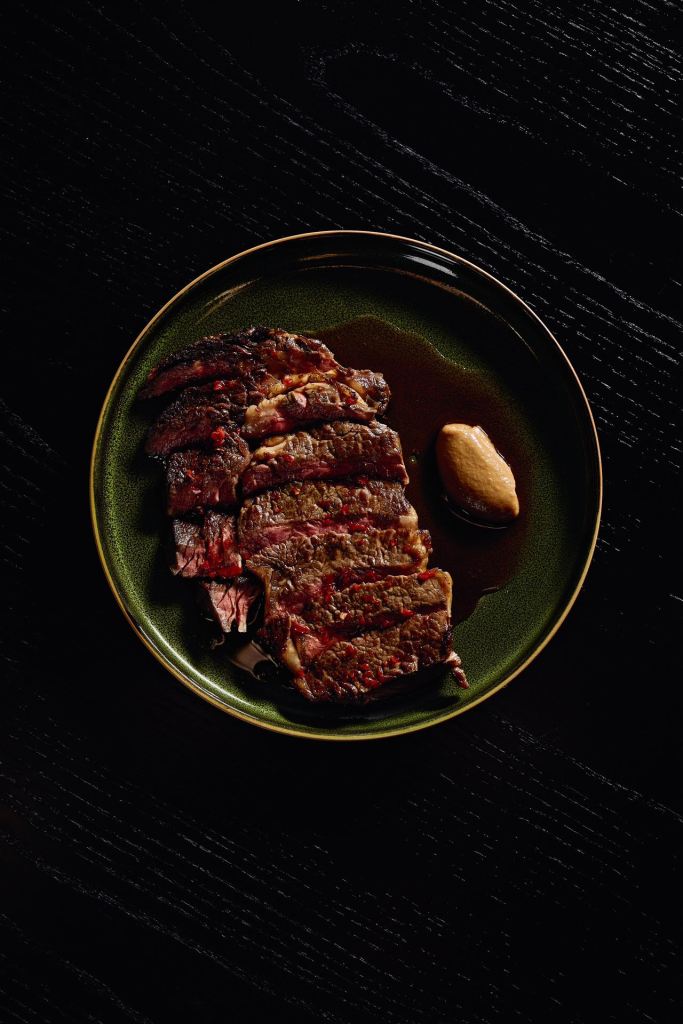
There’s also the house dry-aged scotch fillet. I [work with] a local farm, 36° South, and they produce some of the most brilliant Black Angus beef. We dry age [the steak] for about two weeks so the flavour becomes more intense.
We then cook it on a barbecue so it’s beautifully charred and serve it with our homemade black garlic miso. If you dip the edge of your steak knife [and] spread it on the meat it changes the game completely.
How do you want people to feel when they dine at ODÉ?
A connection to the service. Our venue is intimate – we only have 30 seats – and it allows the front-of-house team to engage with every customer and provide them tailored and warm- hearted service. Our team has a very strong knowledge of every angle of our menu, as well as our wine and drinks list. It’s important to know about the restaurant – if you can’t provide the information diners want, they feel less connected and sometimes disappointed.
Every time a customer dines with us, they say, “It’s super unique and stupidly, tasty”. We serve dishes they’ve probably never seen before because they’re original to us. Firstly, we want to offer customers dishes that are presentable and pretty. Secondly, smell is important – you want them to smell and feel the dish before they start eating. Lastly, when eating, it’s about how the flavour, texture and temperature of the dish interact. It must be perfect.
You held positions at Jock Zonfrillo’s Restaurant Orana, as well as the acclaimed Victorian restaurant, Brae. What did you learn in those kitchens that you use today at ODÉ?
Orana is where I started, and I was under the guidance of Jock Zonfrillo. Before I worked with Jock, I had no idea about Indigenous ingredients but he showed me this world and taught me how to integrate them into a menu. That’s why I want to borrow his inspiration and continue pushing this direction at ODÉ – I think it’s unique and vital to running a restaurant in Australia.
At Brae, I learned from chef Dan Hunter how to run a sustainable restaurant. The menu [at ODÉ] has no deep-fried food, so you don’t end up with a big chunk of heavy, greasy oil that you must discard. It’s very bad for the environment. We’re also trying to achieve zero waste. We try to utilise every part of the ingredient – even the scrap. Sometimes we ferment, sometimes we dehydrate, sometimes we preserve it.
What’s next for ODÉ Bistro?
We’re doing a showcase New Year’s Eve dinner on December 31. It’ll be a six-course degustation and it’s what I want to express about ODÉ Bistro right now – what I am capable of, what ODÉ is and how we’re entering our next chapter.
The menu starts with four amuse bouche as an individual course, before moving into three smaller plates and a larger sharing-style main course. It isn’t typical but very fun – we don’t allow people to have 10 courses and still leave with an empty stomach! We’ll finish with a dessert created specifically for this dinner to celebrate the end of the year.
ODÉ Bistro
151 O’Connell Street, North Adelaide
odebistro.com.au
@ode_bistro
 South Australian Style Magazine